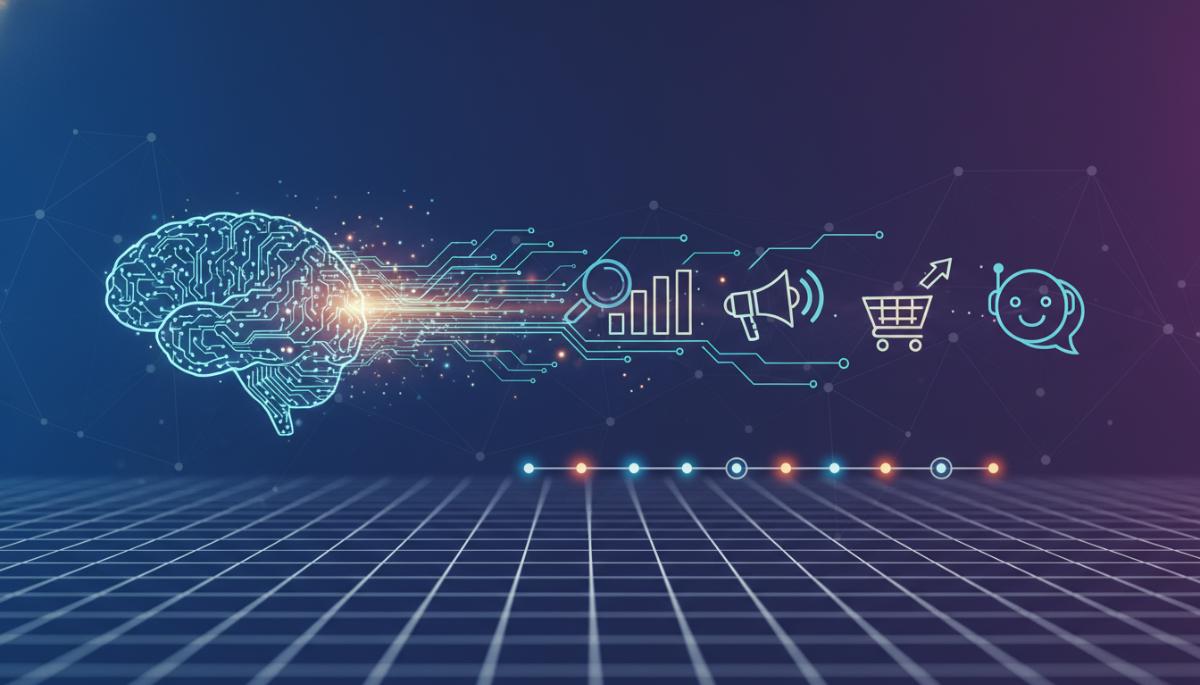
Artificial Intelligence (AI) isn’t just a futuristic buzzword anymore; it’s the engine driving a seismic shift in digital marketing. In 2026, ignoring AI’s transformative power is akin to navigating the digital landscape with a paper map in the age of GPS. This article is your definitive guide, cutting through the hype to deliver actionable insights you can use to stay ahead.
We’ll delve into the specific AI trends reshaping how marketers operate, from hyper-personalization to predictive analytics, ensuring you’re not just aware of these advancements but are equipped to leverage them for tangible results. Forget generic advice; we’re diving deep into real-world examples and forward-looking strategies that will define digital marketing in the years to come. Consider this your AI-powered marketing roadmap.
AI-Powered Hyper-Personalization: Marketing to Individuals, Not Audiences
In 2026, generic marketing blasts are relics of the past. AI enables hyper-personalization at scale, crafting unique customer experiences tailored to individual preferences, behaviors, and even predicted future needs. This goes far beyond simply using someone’s name in an email.
Real-World Examples of AI Personalization (2026):
- Dynamic Website Content: Websites use AI to analyze visitor data in real-time, dynamically altering content, product recommendations, and even the layout to match the user’s inferred intent. Imagine a travel site that instantly highlights family-friendly vacation packages for a user identified as a parent, or luxury experiences for a high-income individual.
- AI-Driven Email Marketing: AI not only personalizes email content but also optimizes send times based on when each individual is most likely to engage. Furthermore, AI analyzes past email interactions to predict which types of content each user finds most valuable, dynamically adjusting future campaigns for maximum impact.
- Personalized Product Recommendations: E-commerce platforms leverage AI to provide hyper-relevant product recommendations based on browsing history, purchase patterns, and even social media activity. These recommendations extend beyond “people who bought this also bought…” to suggest items that align with a user’s unique style, lifestyle, or expressed interests.
Expert Tip: Avoiding the “Creepiness” Factor
While hyper-personalization is powerful, it’s crucial to avoid crossing the line into feeling intrusive. Transparency is key. Clearly communicate to users how their data is being used to personalize their experience. Give them control over their data and allow them to opt out of personalization features. Maintaining user trust is paramount.
Predictive Analytics: Seeing the Future of Marketing (Almost)
Predictive analytics, powered by AI, enables marketers to forecast future trends, anticipate customer behavior, and optimize campaigns for maximum ROI. In 2026, this is no longer a “nice-to-have” but a core competency for any data-driven marketing team.
How Predictive Analytics is Used in 2026:
- Lead Scoring & Qualification: AI algorithms analyze vast datasets to identify the most promising leads, allowing sales teams to focus their efforts on prospects with the highest probability of conversion. This leads to increased efficiency and higher close rates.
- Churn Prediction: AI models identify customers at risk of churn based on their behavior, demographics, and engagement patterns. This enables marketers to proactively address concerns and implement retention strategies to keep valuable customers from leaving.
- Campaign Optimization: Predictive analytics helps optimize marketing campaigns in real-time by forecasting the performance of different ad creatives, targeting parameters, and bidding strategies. This allows marketers to make data-driven adjustments that maximize campaign effectiveness.
Common Mistakes to Avoid with Predictive Analytics:
While predictive analytics is powerful, it’s not foolproof. Common mistakes include relying on incomplete or biased data, failing to properly validate models, and neglecting to consider external factors that can impact predictions. Always remember that predictive analytics provides insights, not guarantees. Critical thinking and human oversight are still essential.
AI-Driven Content Creation: From Idea to Execution (Faster Than Ever)
AI is revolutionizing content creation, automating tasks, generating ideas, and even writing entire articles or scripts. In 2026, AI-powered content creation tools are indispensable for marketers looking to scale their content efforts and improve efficiency.
Examples of AI Content Creation in Action:
- AI-Powered Copywriting: Tools like Jasper.ai and Copy.ai use AI to generate compelling ad copy, website headlines, and product descriptions in seconds. These tools are trained on vast datasets of successful marketing copy, enabling them to produce high-quality content that resonates with target audiences.
- Automated Video Creation: AI-powered video editing software can automatically generate videos from text scripts, images, and video clips. This allows marketers to create engaging video content without requiring extensive video editing skills or resources.
- AI-Generated Blog Posts: AI writing assistants can generate entire blog posts on a variety of topics, based on keyword research and user intent. While these tools may not completely replace human writers, they can significantly speed up the content creation process and provide a solid starting point for blog articles.
The Rise of AI-Powered Chatbots: 24/7 Customer Service
AI-powered chatbots are now the standard for providing instant customer support, answering frequently asked questions, and resolving simple issues around the clock. In 2026, chatbots are becoming increasingly sophisticated, capable of handling complex inquiries and providing personalized assistance.
Key Benefits of AI Chatbots:
- Improved Customer Satisfaction: Chatbots provide instant responses to customer inquiries, reducing wait times and improving overall satisfaction.
- Reduced Customer Service Costs: Chatbots automate many customer service tasks, freeing up human agents to focus on more complex issues.
- Increased Lead Generation: Chatbots can proactively engage website visitors and qualify leads, increasing the number of potential customers.
AI in SEO: Optimizing for a Smarter Search Engine
AI is fundamentally changing how search engines like Google operate. Understanding how AI impacts SEO is critical for achieving top rankings in 2026. The algorithms at Google are always changing and growing. You can learn more about them at Vid.Zonakampoes.com
Key AI SEO Trends in 2026:
- Semantic SEO: AI algorithms are getting better at understanding the meaning and context of search queries. This means that optimizing content for semantic relevance, rather than just keyword density, is becoming increasingly important.
- RankBrain: Google’s AI algorithm, RankBrain, analyzes user behavior to understand search intent and rank results accordingly. This means that focusing on user experience and providing valuable content is essential for SEO success.
- Voice Search Optimization: With the rise of voice assistants like Siri and Alexa, optimizing content for voice search is becoming increasingly important. This means focusing on long-tail keywords and answering common questions directly in your content.
The Impact of AI on Social Media Marketing
AI is transforming social media marketing, enabling marketers to automate tasks, personalize content, and optimize campaigns for maximum engagement. In 2026, AI-powered social media tools are becoming essential for managing and growing a brand’s presence on social platforms.
AI-Powered Social Media Marketing Strategies:
- AI-Driven Content Scheduling: AI tools analyze audience behavior to determine the optimal times to post content on social media, maximizing reach and engagement.
- Automated Social Media Monitoring: AI algorithms monitor social media channels for brand mentions, sentiment analysis, and competitor activity, providing valuable insights for marketers.
- AI-Powered Ad Targeting: AI algorithms analyze user data to identify the most relevant audiences for social media ads, improving campaign performance and reducing wasted ad spend.
AI and the Future of Marketing Jobs
While AI is automating many marketing tasks, it’s also creating new opportunities for skilled professionals. In 2026, marketers who can leverage AI tools and technologies will be in high demand.
New Marketing Roles Emerging in the Age of AI:
- AI Marketing Strategist: Develops and implements AI-powered marketing strategies.
- AI Content Optimizer: Uses AI tools to optimize content for search engines and social media.
- Chatbot Developer: Designs and builds AI-powered chatbots for customer service and lead generation.
AI Digital Marketing Salaries
The salaries of digital marketing positions are skyrocketing with the integration of AI skills. Here is a look at how compensation packages look in 2026:
| Job Title | Average Salary (USD) | Description |
|---|---|---|
| AI Marketing Strategist | $150,000 – $250,000 | Develops and implements AI-powered marketing strategies. |
| AI Content Optimizer | $100,000 – $180,000 | Uses AI tools to optimize content for search engines and social media. |
| Chatbot Developer | $120,000 – $200,000 | Designs and builds AI-powered chatbots for customer service and lead generation. |
FAQ: AI in Digital Marketing (2026)
Here are some frequently asked questions about AI in digital marketing:
Q: How is AI used in digital marketing?
A: AI is used in various aspects of digital marketing, including personalization, predictive analytics, content creation, SEO, social media marketing, and customer service.
Q: What are the benefits of using AI in digital marketing?
A: AI can improve marketing efficiency, personalize customer experiences, optimize campaigns, and generate more leads.
Q: What skills are needed to work in AI-powered marketing?
A: Skills needed include data analysis, machine learning, programming, and marketing strategy.
Q: Is AI going to replace marketers?
A: AI will automate many marketing tasks, but it will also create new opportunities for skilled professionals who can leverage AI tools and technologies.
Q: What are the ethical considerations of using AI in marketing?
A: Ethical considerations include data privacy, transparency, and avoiding bias in AI algorithms.
Q: How can I get started with AI in my marketing efforts?
A: Start by identifying areas where AI can automate tasks or improve efficiency. Experiment with AI-powered marketing tools and technologies, and invest in training for your marketing team.
Conclusion: Embrace the AI Revolution in Digital Marketing
AI is no longer a futuristic concept; it’s the present and future of digital marketing. By embracing AI trends and investing in the skills and technologies needed to leverage them, marketers can gain a competitive advantage and achieve unprecedented results. Don’t get left behind – the AI revolution is here!
